 Japan / Kyoto, Osaka & Kansai / Kumano Kodo (Hongu)
Kumano Kodo (Hongu)
Pilgrim Trails through Cedar Forest to the Grand Shrines
The Kumano Kodo is a network of pilgrim paths over the mountains of the Kii Peninsula, walked by emperors and commoners for a thousand years to the three Grand Shrines of Kumano, and a UNESCO World Heritage site with Koyasan (2004). Hongu is the walkers' base: Kumano Hongu Taisha in its cedar grove, the giant torii at Oyunohara, and the hot-spring villages of Yunomine, Kawayu and Watarase a short bus ride away. Walk part of the Nakahechi route (Hosshinmon-oji to Hongu is an easy half day; from Takijiri-oji most walkers take two or three days), stay in a family-run inn with dinner, and take the bus to Nachi's waterfall and shrine. Getting there is a journey: about 4.5 hours from Osaka by the Kuroshio express to Kii-Tanabe and a bus over the hills. The Kii mountains are among the rainiest places in Japan.
Highlights
- Walking the Nakahechi trail through cedar forest
- Kumano Hongu Taisha
- Oyunohara's giant torii
- Tsuboyu, the only UNESCO-listed bath you can bathe in
- Digging a riverside hot pool at Kawayu
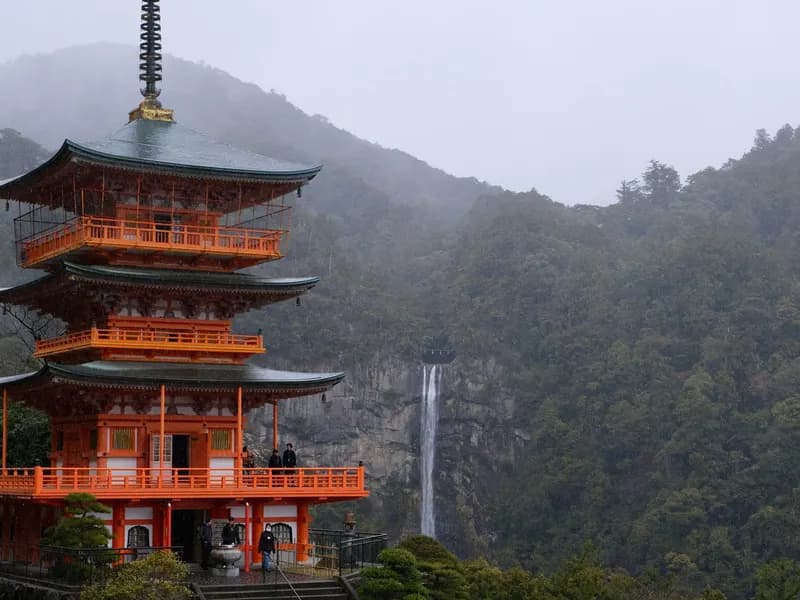
- Nachi Falls and the three-storey pagoda of Seiganto-ji
- The Daimonzaka stone steps
- A night in a family-run inn with a mountain dinner
Things to do
- Walk from Hosshinmon-oji to Kumano Hongu Taisha on the NakahechiMorning · 3h 30m
- Kumano Hongu Taisha & the Oyunohara great toriiAfternoon · 2h
- Tsuboyu, the UNESCO-listed bath at Yunomine OnsenEvening · 1h
- Takijiri-oji to Takahara, the steep first stage of the NakahechiMorning · 4h
- Dainichi-goe trail from Hongu to YunomineMorning · 2h
- Kawayu Onsen: dig your own pool in the riverbedAfternoon · 1h 30m
- Kumano Hongu Heritage CenterAfternoon · 1h
- Day by bus to Nachi: the Daimonzaka steps, Nachi Taisha, Seiganto-ji and the fallsMorning · 7h
- Kumano Hayatama Taisha in ShinguAfternoon · 1h 30m
- Inn dinner of mountain vegetables and river fishEvening · 2h
Tours & tickets
Tourisma may earn a small commission if you book — it never changes your price.
When to go
Best time: March – May, October – November
Heads up
Rainy Season (Tsuyu)
From early June to mid or late July it rains most days, often all day, on Honshu and Kyushu: carry an umbrella, keep outdoor plans flexible, and expect landslide warnings to close mountain roads and some railways after heavy downpours. Hydrangeas are in flower and the crowds are thinner.
Heads up
Heavy Rain on the Kii Mountains: Trail Sections Close
The Kii Peninsula is one of the wettest places in Japan, with most of its rain from June to September. After heavy rain or a typhoon, sections of the Kumano Kodo and the mountain roads close for landslides (Typhoon Talas in 2011 shut routes for months), and river fords rise. Check the Kumano Tourism Bureau's trail-condition notices before you walk, carry rain gear, and keep a day in hand.
- Golden Week — Four public holidays in a week, when much of Japan travels: shinkansen and domestic flights sell out, hotel prices rise, and sights are packed. Avoid travelling between cities on the first and last days.
- Obon — The festival of the ancestors, around 13-16 August: families travel home, shinkansen and flights sell out (Nozomi trains ran reserved seats only at Obon 2026), and there are Bon dances and lantern floats in towns across Japan.
- New Year (Shogatsu) · 31 Dec — Japan's biggest holiday: temples ring their bells 108 times at midnight on 31 December and millions make the first shrine visit (hatsumode), Meiji Jingu and Fushimi Inari above all. Many museums, restaurants and offices close from about 29 December to 3 January; trains run, but are full around the start and end.